Monday, 30 March 2015

YOU ARE INVITED TO HIGH TEA!
In this weeks class we have been asked to find and resize some photos so keeping in line with my Home Economics Theme I resized some High Tea photos I had from my daughters birthday last year.

and yes I was crazy enough to make all this food and the little girls all loved it!!

Saturday, 28 March 2015
The Classroom Blog!
What is a blog I hear you ask, and how can it be useful in a
classroom?
Well a blog is a Web site, usually run by an individual
however others can add comments or if the teacher creates a team blog can post
ideas as well. By using an interactive classroom blog students can collaborate,
share ideas and work with each other on structured activities on their own unique
classroom blog. Learning outcomes that this can support is reflection on class
activities, progressive idea sharing all while being structured and monitored
by the teacher. The use of a blog can also help students progress through
different ITD framework testing and building on learning platforms. In senior
grades blogs can be created and used by students for assignments or their own
personal reflection on their progress in the classroom which constructs a
thinking, analysing brain pattern.

So how would I use this platform in the classroom? As soon
as I made my first blog I had so many ideas on how well this would work in my
classroom. Being a Home Economic based teacher the ideas are endless. The one I
will discuss here is the use of a team blog created for each class. These class
blogs could be set up for each different year level and class and once set up
each student would be able to add to and interact with each student in the
classroom. Setting up links to different ideas like healthy eating plans,
nutrition, food blogs and recipe caches the teacher can get students searching
for and reflecting on different choices set out for them or by them each week. Weekly
tasks of food preparation could be set by the teacher for students to cook, put
together or find recipes they would like to cook, having the students upload
images. For higher grades assessment tasks could be set into a blog where
personal cooking, food ideas, processes and so on could be added to weekly by
the student for an end of semester assessment portfolio.
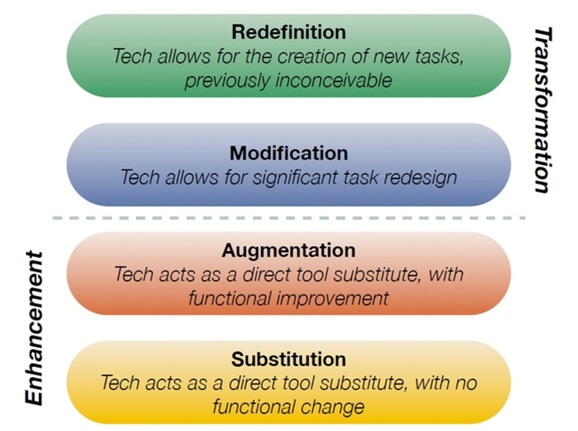
To define the SAMR model and the blogs interaction by students for each level and the use in the classroom is not as easy a task as I thought to begin with. I feel the first two levels Substitution and Augmentation would have students only following the blog and possibly replying to the teacher through comments when they felt the need. Almost like having a PowerPoint or work on the board with students asking questions of the teacher if they felt it was necessary. With the creating of a team blog however I feel this lends itself more to a platform that follows the Transformation side of the SAMR model where students themselves can modify the blog by adding content or in fact taking it to the next level and creating their own blog where they get to design, transcribe and reflect for their peers and the teacher.
Saturday, 21 March 2015
To use it or not to use it!
Coming into this course I knew how to create a PowerPoint, make
a few slides, and send emails, I know impressive! By the end of the second week
of Digital Pedagogies in Secondary school, I have my own blog and wiki and have
interacted with both. I have used flipboard in class and interacted with my
classmates and honestly my mind is in over drive thinking of using these
interactive ICT programs in a classroom situation. Learning how to be able to
transform or modify a wiki to be able to create an activity that will be suitable
for an interactive assignment in the classroom is an invaluable tool to have.
Reading through the course readings this week, two ideas
that I really took notice of and reflected on was firstly giving students in
your class a project or set of work to complete and letting them produce work
with different platforms of ICT. Secondly was to allow students to use ICT in
the classroom so that they can work at independent rates. Both of these ideas
would benefit all students in the class and I would be very interested to find
more information on any research done in this area to find out whether it is a
viable teaching aid.
With the wiki activity we were all involved in this week
even though we worked in small groups we were able to do so at our own pace. Setting
it up using de Bono’s hats theory also ensured that each person answered different
aspects of the question. By using de Bono’s hat theory the lecturer was able to
create the higher order thinking structure needed to complete the activity
without direct instructions pertaining to each detail required.
What I really enjoyed about the wiki activity was being able
to read others ideas, a collaboration of sorts where I could gain other ideas
and theories. I feel that Wiki’s and interactive boards would be great ways for
teachers to share ideas with others in their fields as well as letting their
students do the same with peers. So to use it or not to use it? ICT in the
classroom is a must, and as teachers in the 21st century we need to
find new and creative ways to ensure our students remain engaged. By using ICT
I think we can do this, it won’t be easy to begin with and will require ongoing
personal development however the end results will be worth it in the end.
Monday, 16 March 2015
Moving up the Digital Pedagogy Train
Tying in new information with old can work quite easily in
theory however putting it into context in the classroom can be an entirely
different matter. The idea of using Technology in the classroom at the basic
level can be all that some teachers aspire to. Depending on the pedagogical
practices of the teacher in the learning environment the use of ICT in the room
can be at many different levels. Using Bloom’s Taxonomy as a tool to measure
the stages of learning and thinking, the basic needs in the classroom would
begin with providing knowledge to students. Standing beside the SAMR model this
would consist of Substitution or Augmentation technical tools such as Power-points,
links to videos or blogs on the subject.
As teachers in a fast moving technical environment we need
to proceed through to the critical thinking level of Bloom’s Taxonomy, along
with SAMR model. To do this requires teachers to use Profession Development to
acquire skills in the knowledge of ITC tools available to produce higher order
thinking, and tying them into their own pedagogical practices in the classroom.
To ensure Higher order critical thinking teachers will need to implement and
instruct students in the use of ICT tools that will not only act as a direct
substitute to traditional methods of pedagogical instruction but also in how to
transform and redesign learning tasks.
Obviously not the
picture presented here!! However this is one of my favourite quote/pictures
because I feel it explains quite well just what a classroom consists of.

Hi All,
Wow my third post! I feel like I might be getting the hang of this (almost....) I'm going to be honest writing a blog for all to see is very intimidating, especially if your not sure your on the right track, and I'm not sure if this table is exactly right so I'd LOVE some feedback! this table is from the week 2 course materials. I know its long and I still feel like I should have used a few more ideas in the classroom but at this point in time I think this might work
Thanks!
|
Pedagogy
|
What does it ‘look like’ in practice
|
What does it NOT look like in practice
|
|
Facilitating deep knowledge through
higher order thinking
|
To facilitate higher order thinking in
the classroom, is to provide students with the capacity to acquire knowledge,
and expand on that knowledge themselves. For example in an activity in Home
economics I could give all students a basic recipe, provide a few different
ingredients and ask them all to create an expanded recipe using any of the
extra ingredients provided and their basic recipe. This would provide the
students with knowledge of how to not only follow a recipe, but know how to
add to or change a recipe depending on their preferences and available
ingredients.
|
Providing students with all the
information they needed in a classroom without asking them for their own
input. Again using the previous example, however giving them just a recipe to
follow with the changes already made.
|
|
Facilitating collaborative learning in
which conversations are important
|
Collaborative learning is an important
tool for the classroom, one that can provide students with the tools to
enable themselves to gain knowledge from their peers. In the classroom this
can look like many different things, working together to create mind maps,
group work in the classroom or using IT to work with others around the world.
Teaching you students to have conversations with others to work through
problems will enable them to progress through the levels of Bloom’s taxonomy
|
To not use collaborative learning in
the classroom would disadvantage students. To have all students either
listening to the teacher or working on their own would mean they would not
acquire the skills to look outside themselves. They would not learn to engage
with peers or to find knowledge from other people. Working with others can
not only provide answers but also more questions or another way of looking at
a problem, which are all invaluable tools they would miss out on.
|
|
Supporting students in knowing how
they learn best
|
By providing multiple ways of teaching
in the classroom will enable learners to work out how best they learn for
themselves. AITSL standard 1, 2 and 3 all provide guidelines on what a
teacher should know and provide their students in the classroom. By knowing
your learners and how they best learn you can ensure your teaching covers all
areas. Teachers can also provide this information to their students as they
teach them so as to enable students to be able to help themselves as they
learn.
|
By not following the Professional
standards and providing differing teaching styles for students, teachers will
not enable all their students’ equal opportunities to learn. Standing in
front of a class and teaching by rote will not teach students that learning
in other ways that they can in fact learn from other methods.
|
|
Planning learning that is problem-based,
and situated in real life contexts
|
This is a very basic need for all
students to be able to learn. One in which they can work through a problem by
themselves or as mentioned above know how to collaborate with others to find
a solution. Again I will use the context of Home Economics, give students an
assignment to create a weekly menu of meals at home. They will have a basic
pantry of supplies, a dollar amount/budget to spend and have to follow the
healthy eating plan set by the Australian Government, National Health and
Medical Research council. They will then have to cook 3 meals or snacks from
this plan. Thus teaching students to
plan, budget, find recipes and cook in a set time. These are skills used daily
in real life contexts.
|
How this would not look in the
classroom would be providing all work without relating it to real life
situations. Instead of the work plan previously only providing recipes they
can cook will not teach them to work through problems themselves. Depending
on what recipes the teacher chooses will not take into context the students’ real
life situation of food preferences. Not providing skills to create a shopping
list, budget, or follow a healthy eating plan provides no higher order
thinking, nor real life connections.
|
|
Is relevant to students, and connects
to their background knowledge
|
Ensuring what you are teaching is
relevant to students will ensure that they can make connections to the
learning materials. Students need to feel that what they are learning will be
something they needs to know, can use in their lives or relates to them in
some way.
|
Last century teaching has moved on. No
longer are we teaching by rote where it is the same information for all
regardless of the student’s ability or need. In this situation students will
not engage in learning and acquire any knowledge relevant.
|
|
Supports learning that is owned,
controlled and managed by students themselves
|
By setting up structure early on
students can gain skills to enable themselves to learn at their own pace.
This is an important strategy for students to learn not only for higher
education but also as a life skill. In the classroom this could be seen as a
project with limited structure, therefore letting the student decide just
what they will choose as a subject, how they will complete it and by what
methods.
|
Over guidance by teachers can
dramatically reduce the self-learning skills required by students throughout
their schooling life and into a working environment. In the classroom this
could be seen in over structuring all work for students by teachers at all
times without options.
|
|
Is socially supportive, engaging, and
values cultural knowledge’s
|
I believe that this is shown
especially in areas with high diversity of students. To teach and support
students to be socially supportive of difference. To teach about different
cultures and religions gives empathy and compassion to all human beings and
as such is a valuable tool to learning about the world we live in.
|
Australia is diverse and as such our
classrooms will be as well. To not support this does not follow the national
guidelines in the form of the professional standards. To not support
difference in the classroom does not support teaching all our students
regardless of difference.
|
|
Is supportive of the development of
active citizenship, and strong group identity
|
Getting involved! Getting students to
think about and engage in the world around them is a gift that teachers can
provide to students. It will not only provide skills for each student but
will enable them to begin to make informed choices about decisions they make.
To teach a student that they can make a difference is a valuable lesson.
|
To not support students in learning
that they can make a difference because what can one single person do? This would
be seen a detrimental not only to the student but also to society. Not
teaching students to think about their actions, not enabling that higher
order thinking goes against all we are studying at this point in time.
|
Sunday, 15 March 2015
Keeping up with the Gen Z’s
As with most of my class, this first week has been an eye
opener to say the least. From Blogs to wiki’s (still not too sure about these
however I have one!) to a very handy tool, flip board. The expansive world of
ITD in the classroom is beginning to show its entirely large and expansive
head. It is so overwhelming yet at the same time entirely fascinating, and I
would be lying if I didn't admit to being a little excited about what is next
to discover.
I have been reflecting on just what to write about here and
where to start and something my daughter said to me this morning was very
interesting. She told me the teacher had changed the seating arrangement in her
classroom and instead of sitting in groups they were now in rows…..”we can’t
work together! There is no one to talk to about my ideas” and just that insight
from a 9yr old told me that even at that young age the dynamics of the
classroom and the ways that children want to learn have changed from when I was
the same age. I would never had thought the same way I would have happily just
worked by myself without the collaboration of my peers and not thought about it
at all. This generation has moved forward not only by IT being introduced into
the classroom as a tool but IT changing the way children think, learn and
discover, students have realised that working together as a group benefits them
all.
Watching the Sparks and Honey video I began to realise that
Gen z has grown up with a different set of learning tools. Before the web we
had libraries, you would go (by yourself) look up the information and off you
went. Now students can gather information from all over the world from their
own classrooms, they can watch videos about how to do and make things. They can
talk to other students from the other side of the world and find out so much
more up to date relevant information than we ever could. This is the way of Gen
Z and the future and as teachers we need to ensure that we teach our students
how to do this. We also need to ensure that as teachers we learn how to do this
as well so we can utilize the tools available.
Judy Willis pointed out that for students to learn we need
to keep them ‘curious’, by keeping them curious you will make them want to hear
what you have to tell them. Learning is the key focus in the classroom and for
Gen Z it needs to be at a consistent pace, using tools they interact with
daily, and be done in a way that is best suited to the learners. By ensuring
that you have the skills in ITD across the board you will be able to ensure
that you keep interest up in the classroom.
Ken Robinson is worried that we are killing creativity in
our students, that by the time they reach high school, they have lost the
ability to be creative, purely because we have made making mistakes a bad
thing. Personally I believe that making mistakes leads to focused learning, as
a chef I use my mistakes (or near mistakes) to learn from and extend my
thinking skills to create something better…..even when I have something that is
good I’m always thinking of ways to change that. As teachers we need to teach
this skill to our students! NEED to teach this. There is no better way to
retain information than doing it wrong, working out what went wrong and working
out how to fix.
The one thing that did stick in my mind though was from the
Ken Robinson TED talk. He was talking about an interview he had with Gillian
Lynne, a famous choreographer who in the 30’s was taken to a Doctor because she
couldn't sit still in class. The Doctor told her mother to put her into dance
and Ken asked her how it was when she first walked in? “I can’t tell you how
wonderful it was. We walked into this room and it was full of people like me.
People who couldn't sit still. People who had to move to think”. This was
what had me nodding and thinking this is what we as teachers who are creating
learning environments need to keep in mind about our students. AITSL has laid
it out for us with the teaching standards however we as teachers need to refine
our abilities to read our students and provide ways for them ALL to learn in
our classrooms. I believe that the next 12 weeks in our ITD class will provide
a great starting point and structure to begin to enable us to provide
interesting and diverse classroom environments for our students.
Wednesday, 4 March 2015

My name is Suzanne and currently I am in my second year of a Bachelor of Secondary Education at CQ University. This Blog will follow my journey through University and into my teaching career, and highlight all the lessons I learn throughout the time, have hints and tips I find along the way and might also have a little light humor to lighten the mood. Thanks for reading!
Subscribe to:
Posts (Atom)